Dunkirk
You play Winston Churchill
The army is trapped and France is falling. Is it time to ask Hitler what peace would cost?
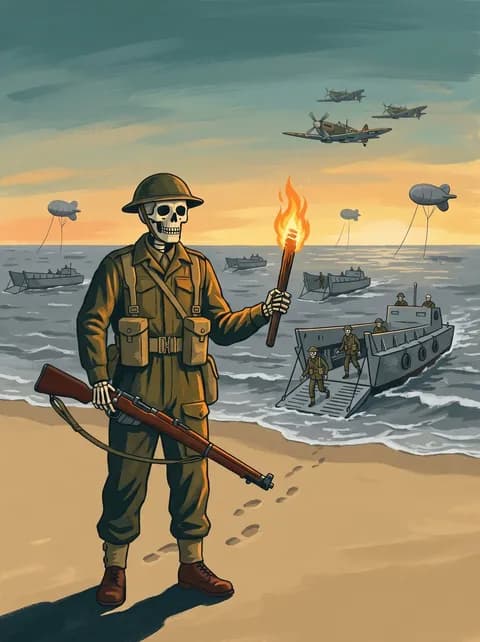
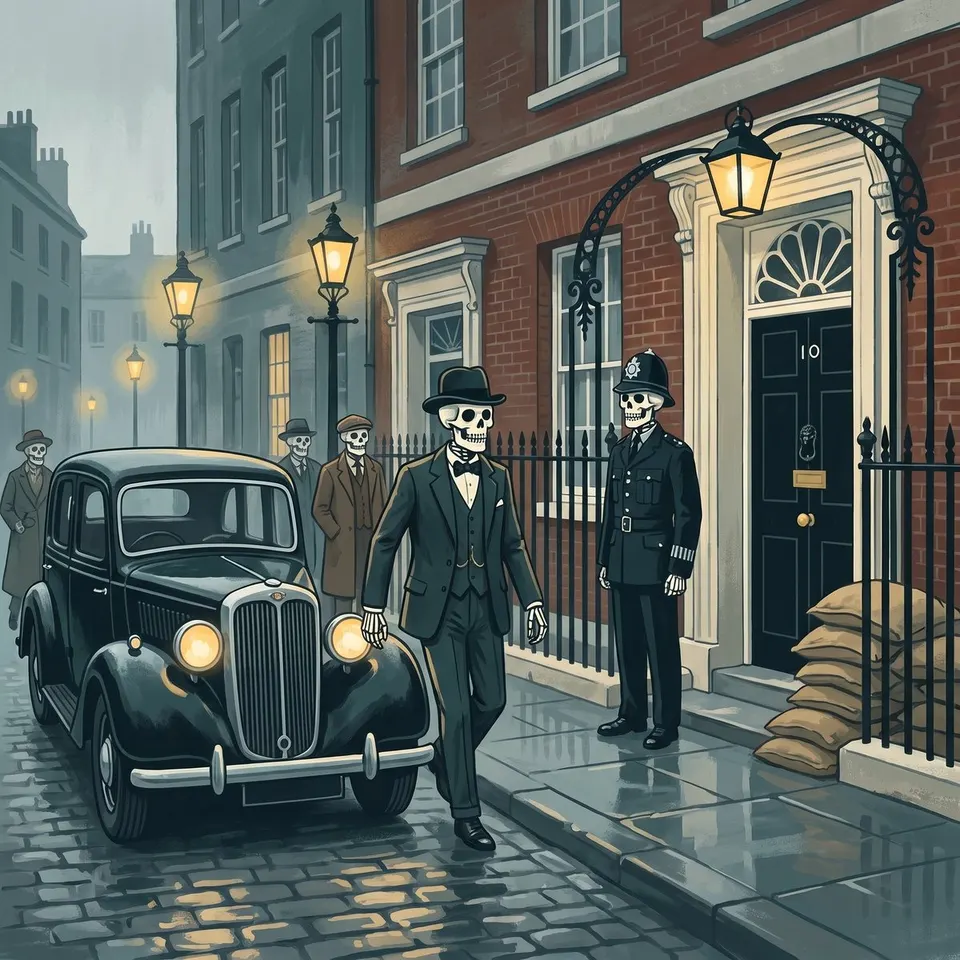
London, May 1940. In two weeks, Hitler's tanks have torn through France, and Britain's only army is trapped with its back to the sea.
Your first call · Men the Navy hopes to save: 45,000
Let Halifax write up his planRule out any talks today
Sources
- Winston S. Churchill, The Second World War, vol. II, Their Finest Hour (1949), ch. I (the War Cabinet of 11 May 1940; the Conservative Party's reserve towards him; Chamberlain still party leader), ch. IV, 'The March to the Sea' (Hitler visiting Rundstedt on 24 May and agreeing that the armour should pause and conserve its strength; his statement that the King of the Belgians had asked the German Command for a suspension of arms), ch. V (Operation Dynamo signalled on the evening of 26 May at 6.57 p.m.; 'the most we could rescue was about forty-five thousand men in two days'; the meeting in his room at the House of Commons with about twenty-five ministers of Cabinet rank, 'Of course, whatever happens at Dunkirk, we shall fight on', ministers jumping up 'shouting and patting me on the back'; the table of 338,226 landed; 'Wars are not won by evacuations'), ch. VI (Reynaud's visit of 26 May and his talk of French withdrawal from the war; his 28 May proposal for an approach to Mussolini)
- Winston S. Churchill, The Second World War, vol. I, The Gathering Storm (1948), ch. XXXVIII, 'The Fall of the Government': the meeting at which Halifax said that as a peer he could not be prime minister in this war; Germany invading Holland and Belgium on the morning of 10 May
- War Cabinet Conclusions, Confidential Annex, W.M. (40) 139th, 26 May 1940, 9 a.m. (CAB 65/13/20): Halifax, 'it was not so much now a question of imposing a complete defeat upon Germany but of safeguarding the independence of our own Empire'; the Prime Minister, 'peace and security might be achieved under a German domination of Europe. That we could never accept'
- War Cabinet Conclusions, Confidential Annex, W.M. (40) 140th, 26 May 1940 (CAB 65/13/21): the informal meeting of War Cabinet ministers at Admiralty House after Reynaud's departure; Halifax's record of his talk with Bastianini, 'matters which caused anxiety to Italy must certainly be discussed as part of the general European settlement'; the War Cabinet inviting the Foreign Secretary to circulate a draft for discussion next day
- War Cabinet Conclusions, Confidential Annex, W.M. (40) 145th, 28 May 1940, 4 p.m. (CAB 65/13/24): the French proposal for a direct approach to Mussolini; Chamberlain, 'no question of our making concessions to Italy while the war continued'; adjourned at 6.15 p.m.; Churchill on the ministers outside the War Cabinet; the reply to Reynaud, 'we cannot feel that this would be the right moment'
- Guy Nicholas Esnouf, British Government War Aims and Attitudes towards a Negotiated Peace, September 1939 to July 1940 (thesis), ch. on 25 to 28 May 1940: quoting W.M. (40) 142nd, 27 May (Churchill: an approach would be 'futile' and involve 'us in a deadly danger'), and Halifax's diary for 27 May ('if it comes to the point, our ways would separate', and he would resign)
- 'Britain's darkest hour', BBC History Magazine, January 2018: the three inner-circle meetings (Admiralty House mid-afternoon 26 May, 4.30 p.m. Downing Street 27 May, 4 p.m. in the Commons 28 May); Halifax's resignation threat and 'a private and unminuted conversation in the garden'; the 7 p.m. resumption after the outer-cabinet meeting
- Anthony McCarten, Darkest Hour (2017), quoting Halifax's diary of 27 May 1940: he found Winston 'full of apologies and affection' (archive.org full-text search)
- Dunkirk evacuation (Wikipedia): the BEF, the Belgians and three French armies trapped in the north (not found in a fetched primary text)