
History trivia
History trivia questions and answers.
Real questions about the people and turning points of history, grouped by era, from easy to properly hard. Tap any question to reveal the answer and what really happened.
The Fall of the Republic trivia questions
Tiberius Gracchus carried one of the best names in Rome. Who was his grandfather?
- ALucius Sulla
- BCato the Elder
- CScipio Africanus
- DGaius Marius
Show answer
C. Scipio Africanus. His grandfather was Scipio Africanus, the general who beat Carthage, Rome's great enemy.
From “The Gracchi”, a story in AugurMarcus Octavius, a fellow tribune, kept vetoing Tiberius Gracchus's land law. How did Tiberius finally get it passed?
- APut Octavius on trial before the Senate
- BHad the people's tribes vote Octavius out of office
- CGot the Senate to overrule the veto
- DHad the consuls arrest Octavius
Show answer
B. Had the people's tribes vote Octavius out of office. He had the tribes vote on removing Octavius. Seventeen voted him out, Tiberius begged him once more, then the eighteenth voted and the law passed.
From “The Gracchi”, a story in AugurTrapped on Mount Vesuvius with only one path down, how did Spartacus's gladiators escape?
- AThey wove wild vines into ladders and climbed down the cliffs
- BThey dug a tunnel under the Roman camp
- CThey bribed the Roman praetor's sentries
- DThey slipped down the guarded path during a storm
Show answer
A. They wove wild vines into ladders and climbed down the cliffs. The mountaintop was covered in wild vines. They made ladders, climbed down the cliffs and took the Roman camp from a side nobody was watching.
From “Spartacus”, a story in AugurWho first leaked the Catiline conspiracy, after her lover bragged he would soon give her seas and mountains?
- ACalpurnia
- BTerentia
- CFulvia
- DClodia
Show answer
C. Fulvia. Fulvia was the mistress of Quintus Curius, one of Catiline's men. Through her, Cicero turned Curius into a spy inside the plot.
From “The Catiline Conspiracy”, a story in AugurEnvoys from which people of Gaul helped Cicero catch the Catiline plotters with their own sealed oath?
- AThe Aedui
- BThe Helvetii
- CThe Arverni
- DThe Allobroges
Show answer
D. The Allobroges. Cicero told the Allobroges envoys to play along. The plotters sealed an oath for them, and Cicero's men seized it at the Mulvian Bridge.
From “The Catiline Conspiracy”, a story in AugurWhat did Julius Caesar say as he crossed the Rubicon into Italy?
- AI came, I saw, I conquered
- BThe die is cast
- CEt tu, Brute?
- DI am Caesar and no king
Show answer
B. The die is cast. Caesar said "The die is cast." Like a throw of the dice, crossing the river with his army could not be taken back.
From “The Rubicon”, a story in AugurShort of grain while besieging Pompey at Dyrrhachium, what did Caesar's soldiers throw at Pompey's jeering men?
- ABread baked from a root called chara
- BStones wrapped in insulting messages
- CPompey's captured standards
- DRotten figs from Tusculum
Show answer
A. Bread baked from a root called chara. They baked bread from chara root mixed with milk. When deserters showed Pompey a loaf, he said, "What wild beasts we are fighting with."
From “Pharsalus”, a story in AugurWhere was Julius Caesar killed on the Ides of March, 44 BCE?
- AIn a hall beside Pompey's theatre
- BOn the steps of the temple of Jupiter
- CIn his own house at dawn
- DIn the Senate House in the Forum
Show answer
A. In a hall beside Pompey's theatre. The Senate met in a hall Pompey had built beside his theatre. Caesar fell at the foot of Pompey's statue with twenty-three wounds.
From “The Ides of March”, a story in AugurOn the morning of the Ides, Caesar decided to stay home. Who talked him into going to the Senate after all?
- ADecimus Brutus
- BCalpurnia
- CMark Antony
- DGaius Cassius
Show answer
A. Decimus Brutus. Decimus Brutus, a general Caesar trusted and had named a backup heir, laughed at the priests' bad omens and led him out by the hand.
From “The Ides of March”, a story in Augur
Age of the Vikings trivia questions
In June 793, raiders from Scandinavia looted the church and killed monks on which holy island off the coast of Northumbria?
- AIona
- BLindisfarne
- CAnglesey
- DThe Isle of Man
Show answer
B. Lindisfarne. Ships crossed the North Sea and landed on Lindisfarne, home of Saint Cuthbert's body. The raiders dug up the altars and took every treasure they could carry.
From “Lindisfarne”, a story in AugurWhen the great heathen army wintered in East Anglia in 865, what did the East Angles give it in return for peace?
- ASilver
- BShips
- CHorses
- DHostages
Show answer
C. Horses. On foot the army was slow. The East Angles gave it horses and made peace, and in late 866 it rode north and took York.
From “The Great Heathen Army”, a story in AugurWhere did King Alfred go after Guthrum's surprise attack on Chippenham in January 878?
- AInto the marshes of Somerset
- BInto exile in Francia
- CTo Rome, like the king of Mercia
- DBehind the walls of Exeter
Show answer
A. Into the marshes of Somerset. Alfred slipped into the woods and marshes of Somerset with a few men, then built a fort at Athelney, an island in the marsh.
From “Alfred in the Marshes”, a story in AugurAfter Alfred beat him at Edington and besieged his army at Chippenham in 878, what did the Danish king Guthrum do?
- AHe sailed home to Denmark
- BHe handed London over to Alfred
- CHe married Alfred's sister
- DHe was baptized, with Alfred as his godfather
Show answer
D. He was baptized, with Alfred as his godfather. After fourteen days besieged, the Danes gave hostages and swore to leave. Guthrum was baptized with Alfred as his godfather, then settled in East Anglia.
From “Alfred in the Marshes”, a story in AugurLeif, son of Erik the Red, sailed west of Greenland and reached a land where his foster father found grapes. What did Leif name it?
- AMarkland
- BVinland
- CHelluland
- DIceland
Show answer
B. Vinland. His foster father Tyrkir found grapes there, so Leif filled his ship with grapes and timber and named the place Vinland, Wine Land.
From “Vinland”, a story in AugurLocal people in Vinland offered Thorfinn Karlsefni fine furs for swords and spears. What did he give them instead?
- AIron axes
- BSilver arm-rings
- CSalted fish
- DMilk
Show answer
D. Milk. Karlsefni banned trading weapons and had the women bring out milk. The visitors wanted nothing else, and left with their purchases in their stomachs.
From “Vinland”, a story in AugurWhich English nobleman, nicknamed 'the Grabber', ran from the battle of Assandun in 1016 and took his men with him?
- AEadric Streona
- BGodwin of Wessex
- CEdmund Ironside
- DLeofric of Mercia
Show answer
A. Eadric Streona. Eadric Streona changed sides whenever it paid. He fled mid-battle at Assandun, and in 1017 Cnut had him killed in London and his body thrown over the wall.
From “Cnut's Empire”, a story in AugurBefore he was king of Norway, Harald Hardrada served in the Varangian Guard. Whose bodyguard was it?
- AThe king of the Franks'
- BThe caliph's, in Baghdad
- CThe emperor's, in Constantinople
- DThe Pope's, in Rome
Show answer
C. The emperor's, in Constantinople. Harald fled east after his half-brother's last battle and joined the Varangian Guard, the emperor's bodyguard of hired northern warriors in Constantinople. He got rich fighting the emperor's wars.
From “Stamford Bridge”, a story in AugurWhy were most of Harald Hardrada's men fighting without their mail shirts at Stamford Bridge in 1066?
- ATheir mail had sunk with ships in a storm
- BIt was hot, and they expected only to collect hostages
- CTostig had traded it for food in York
- DHarald wanted them light for a fast march south
Show answer
B. It was hot, and they expected only to collect hostages. That Monday was hot and nobody expected a fight, so they left their mail at the ships. Then King Harold's army appeared, after marching up from the south day and night.
From “Stamford Bridge”, a story in Augur
Crowns and Crusades trivia questions
Who was crowned king of England at Westminster on Christmas Day 1066?
- AHarold Godwinson
- BHarald Hardrada
- CWilliam, Duke of Normandy
- DTostig Godwinson
Show answer
C. William, Duke of Normandy. King Harold was killed late in the day at Hastings, along with his brothers Gyrth and Leofwine. On Christmas Day 1066, William was crowned at Westminster.
From “Hastings”, a story in AugurAt the battle of Hastings, how did the Normans draw English soldiers down off their ridge?
- AThey faked retreats
- BThey set the grass on fire
- CThey offered a truce, then attacked
- DThey dug pits at the foot of the hill
Show answer
A. They faked retreats. When part of William's line broke, some English chased it downhill and were cut off. The Normans then used fake retreats to pull more men off the ridge.
From “Hastings”, a story in AugurWhere did four of Henry II's knights kill Thomas Becket on 29 December 1170?
- AWestminster Abbey
- BYork Minster
- CWinchester Cathedral
- DCanterbury Cathedral
Show answer
D. Canterbury Cathedral. After Henry raged at his Christmas court about a low-born clerk shaming him, four knights killed Becket in Canterbury Cathedral, beside the altar, at the evening service.
From “Becket”, a story in AugurWhat did King Henry II do at Thomas Becket's tomb in 1174?
- ALaid his crown on it and swore to obey the Pope
- BWalked barefoot to it and let the monks whip him
- CHad it sealed and guarded by his soldiers
- DSwore an oath on it to go on crusade
Show answer
B. Walked barefoot to it and let the monks whip him. Europe was horrified by the murder. Becket was made a saint in 1173, and in 1174 Henry walked barefoot to his tomb and was whipped by the monks.
From “Becket”, a story in AugurWho captured Richard the Lionheart near Vienna as he travelled home in disguise in 1192?
- ALeopold, Duke of Austria
- BPhilip, king of France
- CHis brother John
- DSaladin's envoys
Show answer
A. Leopold, Duke of Austria. At Acre, Richard's men had thrown Leopold's banner in the dirt. Near Vienna Richard was recognised and taken by Leopold, and spent over a year as a prisoner.
From “The Lionheart and Saladin”, a story in AugurAfter saving Jaffa in 1192, Richard the Lionheart fell sick with fever. What did Saladin send him?
- ASilk robes and gold
- BA jewelled sword
- CFruit, and snow from the mountains
- DThe True Cross
Show answer
C. Fruit, and snow from the mountains. Saladin sent fruit and snow to cool his drinks, along with terms. On 2 September 1192 they agreed a three-year truce, with free visits to Jerusalem for pilgrims.
From “The Lionheart and Saladin”, a story in AugurIn June 1215, at which meadow beside the Thames did King John seal the charter later called Magna Carta?
- AClarendon
- BBouvines
- CSmithfield
- DRunnymede
Show answer
D. Runnymede. With rebels holding London, John came from Windsor to the meadow at Runnymede, and on 15 June 1215 the charter was sealed.
From “Magna Carta”, a story in AugurAfter Robert the Bruce killed the English knight Henry de Bohun with one axe blow at Bannockburn, what did he say he was sorry about?
- ANot taking de Bohun alive for ransom
- BBreaking his good axe
- CKilling a knight who had charged alone
- DFighting before his army was ready
Show answer
B. Breaking his good axe. Bruce dodged de Bohun's charge and brought his axe down on his head. When his lords scolded him for the risk, he said he was sorry he had broken his good axe.
From “Bannockburn”, a story in AugurAs Richard III charged at Henry Tudor at Bosworth in 1485, whose men swept in and cut him down?
- ASir William Stanley's
- BThe Duke of Norfolk's
- CThe Duke of Buckingham's
- DLord Hastings's
Show answer
A. Sir William Stanley's. Richard refused a horse to flee and charged, killing Henry's standard-bearer, until Sir William Stanley's men swept in and cut him down.
From “Bosworth”, a story in Augur
Age of Piracy trivia questions
Crossing the jungle to attack Panama in 1671, Henry Morgan's starving men found an empty Spanish camp. What did they end up eating there?
- ALeather bags, beaten soft and grilled
- BMonkeys shot from the trees
- CMouldy ship's biscuit from their canoes
- DRoots dug up by the river
Show answer
A. Leather bags, beaten soft and grilled. The Spanish fled every ambush and took their food. Morgan's men sliced leather bags, beat them between stones, scraped off the hair and grilled them.
From “The Sack of Panama”, a story in AugurWhat happened to Henry Morgan after he was arrested and sent to London for the sack of Panama?
- AHe was hanged at Execution Dock
- BHe was knighted and sent back to Jamaica as deputy governor
- CHe was held in the Tower of London until he died
- DHe was handed over to Spain for trial
Show answer
B. He was knighted and sent back to Jamaica as deputy governor. Peace with Spain had been signed before the raid, so Morgan took the blame. Yet London knighted him in 1674 and sent him back as deputy governor.
From “The Sack of Panama”, a story in AugurCaptain Kidd's pirate-hunting crew sailed under a rule called "no prey, no pay." What did it mean?
- AOfficers were paid first and the crew last
- BMen who refused to fight lost their share
- CThe crew was paid only from what they captured
- DThe King took the loot before any wages
Show answer
C. The crew was paid only from what they captured. Kidd's backers paid the crew nothing up front. After a year at sea with no prizes, his unpaid men began eyeing ships his licence did not cover.
From “Captain Kidd”, a story in AugurCaptain Kidd said French passes proved his capture of the Quedagh Merchant was legal. What became of those passes?
- AKidd threw them overboard off Madagascar
- BLord Bellomont burned them in Boston
- CThey were buried with his gold on Gardiners Island
- DThey vanished before his trial, found 200 years later
Show answer
D. They vanished before his trial, found 200 years later. In London the passes went missing before his trial, and Kidd was convicted of piracy and of murdering his gunner. He was hanged in 1701, and the passes resurfaced two centuries later.
From “Captain Kidd”, a story in AugurWhen Blackbeard blockaded Charleston in 1718 and held some of its leading citizens prisoner, what did he demand?
- AA chest of medicine
- BA ship's weight in gold
- CA royal pardon
- DGunpowder and cannon
Show answer
A. A chest of medicine. His men badly needed medicine. Charleston sent it after the deadline slipped, and Blackbeard freed the prisoners, minus their gold, silver and fine clothes.
From “Blackbeard at Charleston”, a story in AugurWhat was surprising about Blackbeard's record before his final fight at Ocracoke Inlet in 1718?
- AHe had never taken a prisoner
- BHe was not known to have killed anyone
- CHe had never lost a ship
- DHe had never sailed north of the Caribbean
Show answer
B. He was not known to have killed anyone. Ships usually surrendered as soon as they saw him, so there was rarely any fighting. The beard, the smoking fuses and the stories did the work.
From “Blackbeard at Charleston”, a story in AugurHow did the pirate Charles Vane escape Nassau when Governor Woodes Rogers's warships arrived in July 1718?
- AHe sank a ship to block the main channel
- BHe disguised his sloop as a fishing boat
- CHe sent a burning prize ship at the warships
- DHe hid upriver until the warships left
Show answer
C. He sent a burning prize ship at the warships. The burning prize drifted at the warships, which cut their cables and backed away. Vane sailed out the second channel under the black flag.
From “The King's Pardon”, a story in AugurAfter Anne Bonny and Mary Read were sentenced to hang in Jamaica in 1720, how did they get their hangings put off?
- AThey escaped from their cells
- BThey bribed the president of the court
- CThey named the men who had led the crew
- DThey told the court they were pregnant
Show answer
D. They told the court they were pregnant. A court could not hang a pregnant woman, so both hangings were put off. Read died in prison. Bonny was never hanged and vanished from the record.
From “Bonny and Read”, a story in AugurWhat was the famous motto of the pirate Bartholomew Roberts, known as Black Bart?
- A"A merry life and a short one"
- B"Dead men tell no tales"
- C"No prey, no pay"
- D"Give no quarter"
Show answer
A. "A merry life and a short one". Roberts said honest work at sea meant hard labour and low pay, while piracy meant plenty, pleasure and freedom, with only a sour look or two at the hanging.
From “Black Bart”, a story in Augur
Athens and Sparta trivia questions
Athens begged Sparta for help before the battle of Marathon. Why did the Spartans not march out at once?
- ATheir king was on trial at home
- BThey refused to fight beside Plataea
- CThey were busy fighting a war with Argos
- DTheir law said they could not march until the full moon
Show answer
D. Their law said they could not march until the full moon. It was the ninth day of the month, and Spartan law said they could not march until the moon was full, nearly a week away.
From “Marathon”, a story in AugurWhich small town was the only one to send help to Athens at once before Marathon?
- AEretria
- BPlataea
- CThebes
- DCorinth
Show answer
B. Plataea. Plataea, which owed Athens its freedom, sent every fighting man it had. Together they made about ten thousand Greek hoplites.
From “Marathon”, a story in AugurWhat did Xerxes do after a storm smashed his bridges across the Hellespont?
- AAsked the oracle at Delphi for a calm sea
- BHad the sea whipped three hundred times
- CSacrificed his finest horses to the sea
- DTurned back and sailed his army around Greece
Show answer
B. Had the sea whipped three hundred times. He had the sea whipped three hundred times, threw chains into it and beheaded the men in charge. The next bridge, laid across hundreds of ships, held.
From “Thermopylae”, a story in AugurWho sold Xerxes the mountain path that led around behind the Greeks at Thermopylae?
- AHippias
- BEphialtes
- CPausanias
- DDemaratus
Show answer
B. Ephialtes. A local man, Ephialtes, sold Xerxes the path. At dawn the Phocians guarding it fled to the peak, and the Persians walked straight past them.
From “Thermopylae”, a story in AugurThe oracle at Delphi said only a wooden wall would keep Athens safe. What did Themistocles say the wooden wall meant?
- AThe fleet of ships
- BA new wall across the Isthmus
- CThe wooden gates of Athens
- DThe thorn fence around the Acropolis
Show answer
A. The fleet of ships. Some old men thought it meant the thorn fence around the Acropolis. Themistocles said it meant the ships, and Athens bet everything on his reading.
From “Salamis”, a story in AugurWhom did Themistocles send to tell the Persians that the Greeks were about to run from Salamis?
- AAristides, a fellow general
- BAdeimantus, the Corinthian commander
- CSicinnus, his servant
- DEurybiades, the Spartan admiral
Show answer
C. Sicinnus, his servant. He sent his servant Sicinnus. Xerxes believed it and closed both ends of the strait, so the Greeks fought in the narrows.
From “Salamis”, a story in AugurWhich Athenian caught the plague of 430 BCE, survived, and described every symptom so people could recognise it again?
- AHerodotus
- BAristophanes
- CThucydides
- DXenophon
Show answer
C. Thucydides. Thucydides, who was writing the history of the war, caught the disease and lived. He recorded its symptoms in case it ever came back.
From “The Plague of Athens”, a story in AugurWhy did Nicias delay the Athenian retreat from Syracuse for twenty-seven days?
- AA storm wrecked his loaded ships
- BThe full moon went dark, and his soothsayers told him to wait
- CHe was waiting for Alcibiades to return
- DAthens ordered him to wait for a second fleet
Show answer
B. The full moon went dark, and his soothsayers told him to wait. On the night they were to sail, the moon went dark. Nicias waited as told, and the Syracusans trapped and destroyed his fleet in the harbour.
From “The Sicilian Expedition”, a story in AugurAfter the jury found him guilty, what penalty did Socrates first say he deserved?
- AFree dinners at the city's expense
- BExile to Thessaly
- CA promise never to teach again
- DNo penalty at all, and he refused to name one
Show answer
A. Free dinners at the city's expense. He said he deserved free dinners at the city's expense. His friends, among them Plato, then offered a fine, but the jury chose death.
From “The Trial of Socrates”, a story in Augur
Age of the Pharaohs trivia questions
Once Hatshepsut was crowned pharaoh, how did her statues begin to show her?
- AAs the falcon god Horus
- BAs a mother holding the boy king
- CAs a king, false beard and all
- DAs a queen in a long dress, feet together
Show answer
C. As a king, false beard and all. Egypt's kings were shown as men, with a kilt, a striped headcloth and a tied-on beard. Once crowned, Hatshepsut was shown as a king too.
From “Hatshepsut”, a story in AugurHatshepsut's five ships came home with gold, ebony, incense, apes and thirty-one living myrrh trees. Where had they sailed?
- ANubia
- BCrete
- CPunt
- DByblos
Show answer
C. Punt. She sent five ships far south down the Red Sea to Punt, and carved the haul on her temple walls, boasting nothing like it had ever been brought for any king.
From “Hatshepsut”, a story in AugurWhich god did the pharaoh Amenhotep IV, who renamed himself Akhenaten, devote himself to?
- AThe Aten, the disc of the sun
- BHorus, the falcon god of kings
- CAmun, king of the gods
- DOsiris, lord of the dead
Show answer
A. The Aten, the disc of the sun. He loved the Aten, shown as a sun disc with rays ending in little hands. He built it a new city, Akhetaten, and took the name Akhenaten.
From “One God”, a story in AugurRib-Hadda begged Akhenaten for archers and got complaints instead. Which port did he rule?
- ATyre
- BUgarit
- CByblos
- DSidon
Show answer
C. Byblos. Rib-Hadda of Byblos got complaints instead of troops. In the end his own younger brother turned Byblos against him and drove him out.
From “One God”, a story in AugurBefore the battle of Kadesh, who told Ramesses II that the Hittite king was far away at Aleppo?
- AHis governors in the Syrian towns
- BTwo captured Hittite scouts
- CA messenger from the Hittite king
- DTwo Shasu herders from the desert
Show answer
D. Two Shasu herders from the desert. The Shasu lied. Ramesses raced ahead with one division, and captured scouts then revealed the whole Hittite army was just behind Kadesh.
From “Kadesh”, a story in AugurWhat makes the peace treaty between Ramesses II and the Hittite king Hattusili III famous?
- AIt was signed the day after the battle of Kadesh
- BIt is called the oldest peace treaty whose text survives
- CIt was carved on the walls of Kadesh itself
- DIt made the Hittite king a servant of Egypt
Show answer
B. It is called the oldest peace treaty whose text survives. Ramesses made peace with Hattusili III in about 1259 BCE. Their treaty is called the oldest peace treaty whose text survives, and a copy hangs at the United Nations.
From “Kadesh”, a story in AugurUnder Ramesses III, the builders of the royal tombs were paid in grain. What did they do when their grain was weeks late?
- ABroke into the royal granaries at Thebes
- BWalked off the job, shouting that they were hungry
- CSealed the unfinished tomb and fled the village
- DSailed north to plead with Pharaoh in person
Show answer
B. Walked off the job, shouting that they were hungry. The crew marched past all five guard posts and sat down behind an old temple. The scribe Amennakht recorded the strikes in a journal now in Turin.
From “The First Strike”, a story in AugurHow did Cleopatra get past her brother's guards into the palace at Alexandria to meet Julius Caesar?
- AShe came disguised as one of Caesar's soldiers
- BShe led her hired army through the city gates
- CShe swam to the palace steps by night
- DA friend carried her in tied up in a bedding sack
Show answer
D. A friend carried her in tied up in a bedding sack. Her friend Apollodorus the Sicilian brought her by small boat at night and carried her in a bedding sack. Caesar took her side.
From “Cleopatra and Caesar”, a story in AugurAt the battle of Actium, Cleopatra's sixty ships hoisted sail and broke through the middle of the fight. What did Mark Antony do?
- ALeft his fleet and followed her
- BTurned his flagship to block her escape
- CFought on until Agrippa captured him
- DMarched his army inland to fight on land
Show answer
A. Left his fleet and followed her. Antony left his fleet still fighting and chased her. His army waited seven days for him, then went over to Octavian.
From “Actium”, a story in Augur
Daggers and Domes trivia questions
Where was Giuliano de' Medici murdered by the Pazzi conspirators in 1478?
- AIn Florence's cathedral, during Mass
- BAt a dinner in the Medici palace
- CIn the government palace
- DOn a bridge over the river Arno
Show answer
A. In Florence's cathedral, during Mass. The plotters planned to stab both Medici brothers at a Sunday dinner, but Giuliano sent word he was ill, so the murder moved to Mass in the cathedral.
From “The Pazzi Conspiracy”, a story in AugurHow did Lorenzo de' Medici end the war that the Pope and Naples waged on Florence after the Pazzi Conspiracy?
- AHe rode to Rome to beg Pope Sixtus IV for forgiveness
- BHe gave up power and went into exile
- CHe sailed to Naples without warning to face King Ferrante
- DHe hired the Pope's own captain, Montesecco, to lead his army
Show answer
C. He sailed to Naples without warning to face King Ferrante. In December 1479 Lorenzo left Florence without warning and sailed to Naples. King Ferrante kept him three months, then sent him home in March 1480 with a peace.
From “The Pazzi Conspiracy”, a story in AugurWhat did bands of boys collect door to door in Florence for the friar Savonarola's great bonfire of 1497?
- AWeapons and armour seized from the Medici
- BVanities: masks, racy books and paintings
- CSilver and gold taken from the churches
- DDebt notes held by the city's bankers
Show answer
B. Vanities: masks, racy books and paintings. The boys asked for anything that led to sin. On the last day of carnival it was stacked into a pyramid about sixty feet high and set on fire.
From “The Bonfire of the Vanities”, a story in AugurWhat happened to the trial by fire that Savonarola's side agreed to hold against a Franciscan preacher in April 1498?
- AFra Domenico walked through the flames unharmed
- BSavonarola walked into the fire himself and was badly burned
- CThe Franciscan friar died in the flames
- DIt never took place, after hours of arguing and then rain
Show answer
D. It never took place, after hours of arguing and then rain. On 7 April the two sides argued for hours over robes and the Host, the rain came, and the test never happened. The crowd decided its prophet had lost.
From “The Bonfire of the Vanities”, a story in AugurHow did Cesare Borgia deal with the captains who had rebelled against him, when they met him at Senigallia in 1502?
- AHe beat them in open battle outside the town
- BHe paid them off and sent them to fight for France
- CHe greeted them warmly, then had them seized in a private room
- DHe had them poisoned at a banquet
Show answer
C. He greeted them warmly, then had them seized in a private room. On 31 December Cesare led the captains into a private room and had them seized. Vitellozzo and Oliverotto were strangled that night, the two Orsini in January.
From “The Trap at Senigallia”, a story in AugurWhich pope had Michelangelo paint the vault of the Sistine Chapel?
- AJulius II
- BSixtus IV
- CAlexander VI
- DClement VII
Show answer
A. Julius II. Julius II wanted the ceiling of the chapel his uncle, Sixtus IV, had built. Michelangelo, a sculptor, tried every excuse before taking the job.
From “The Sistine Ceiling”, a story in AugurWhen Michelangelo made a giant bronze statue of Pope Julius II for Bologna, what did the Pope want the statue to hold?
- AA book
- BThe keys of St Peter
- CA cross
- DA sword
Show answer
D. A sword. Asked whether the statue should hold a book, Julius answered, "A sword. As for me, I am no scholar."
From “The Sistine Ceiling”, a story in AugurIn 1513 Machiavelli was tortured on the rope after his name turned up on a list of plotters. What did he do?
- AHe confessed and named his friends
- BHe took six drops and confessed nothing
- CHe fainted and was freed after one drop
- DHe escaped from his cell with Soderini's help
Show answer
B. He took six drops and confessed nothing. Machiavelli took six drops of the strappado and confessed nothing. He was released in March 1513, when Cardinal Giovanni de' Medici became Pope Leo X.
From “Machiavelli's Fall”, a story in AugurAfter the Sack of Rome in 1527, how did Pope Clement VII slip out of the Castel Sant'Angelo?
- ADressed as a monk
- BHidden in a cart of laundry
- CDressed as a merchant
- DDressed as a Swiss Guard
Show answer
C. Dressed as a merchant. After surrendering and agreeing to a ransom of 400,000 ducats, Clement slipped out of the castle in December dressed as a merchant and fled to Orvieto.
From “The Sack of Rome”, a story in Augur
Plague and Fire trivia questions
How did Pope Clement VI try to protect himself from the plague at Avignon in 1348?
- AHe drank only water from a sealed well
- BHe shut himself in his palace beside great fires
- CHe sailed at once for Rome with his court
- DHe had the city's gates walled up and guarded
Show answer
B. He shut himself in his palace beside great fires. Doctors believed plague travelled on foul air and that fire cleaned it. On his doctor's advice, Clement saw almost nobody and kept great fires burning.
From “The Pope's Fire”, a story in AugurIn June 1348, with Avignon still burying its plague dead, what did Pope Clement VI buy from Queen Joanna of Naples?
- AThe port of Marseille
- BThe castle at Étoile
- CThe port of Toulon
- DThe city of Avignon itself
Show answer
D. The city of Avignon itself. On 9 June 1348 Clement bought Avignon from its owner, Queen Joanna of Naples, for 80,000 gold florins.
From “The Pope's Fire”, a story in AugurAfter Strasbourg burned its Jews on St Valentine's Day during the Black Death, what happened to the debts owed to them?
- AEvery debt was cancelled, and their money was shared among the craftsmen
- BThe debts passed to the bishop of Strasbourg
- CThe city council collected them for its treasury
- DThe debts were sent to the pope at Avignon
Show answer
A. Every debt was cancelled, and their money was shared among the craftsmen. Every debt owed to a Jew was cancelled. "The money was indeed the thing that killed the Jews," a Strasbourg chronicler wrote.
From “Strasbourg”, a story in AugurIn 1377, what did Ragusa (Dubrovnik) require of anyone arriving from a plague-hit place?
- AForty days aboard their own ship in the harbour
- BA sealed letter of good health from a doctor
- CA month on the island of Mrkan or at Cavtat before entering
- DA health tax paid at the city gate
Show answer
C. A month on the island of Mrkan or at Cavtat before entering. On 27 July 1377 the Great Council voted that travellers from plague places first spend a month on Mrkan or in Cavtat, Ragusans and foreigners alike.
From “Thirty Days”, a story in AugurThe word quarantine comes from an Italian phrase meaning what?
- AThirty days
- BClosed harbour
- CIsland of waiting
- DForty days
Show answer
D. Forty days. Ragusa made travellers wait a month. Venice later stretched the wait to forty days, quaranta giorni, and the world got the word quarantine.
From “Thirty Days”, a story in AugurWhich rebel preacher of 1381 asked, "When Adam delved and Eve span, who was then a gentleman?"
- AWat Tyler
- BJohn Ball
- CSir John Newton
- DJohn Bampton
Show answer
B. John Ball. John Ball, a priest freed from the archbishop's prison at Maidstone, preached against serfdom to the rebels camped on Blackheath.
From “The Peasants' Revolt”, a story in AugurAt Smithfield in 1381, who struck down Wat Tyler after he drew a dagger on one of the king's men?
- AWilliam Walworth, the mayor of London
- BSir John Newton, a captured knight
- CRobert Hales, the treasurer
- DSimon Sudbury, the archbishop
Show answer
A. William Walworth, the mayor of London. Walworth struck Tyler down and a royal squire ran him through. As the rebels bent their bows, the young Richard II rode out alone and led them away.
From “The Peasants' Revolt”, a story in AugurWhat did the Derbyshire village of Eyam decide to do when plague came back hard in 1666?
- AAsk the king to send soldiers to seal the roads
- BMove the healthy families to Sheffield
- CStay shut inside the parish until the plague was gone
- DBurn the village and leave
Show answer
C. Stay shut inside the parish until the plague was gone. Rector William Mompesson and the old minister Thomas Stanley persuaded Eyam to stay inside the parish, while the Earl of Devonshire sent food to the boundary.
From “Eyam”, a story in AugurWhere did the Great Fire of London break out in September 1666?
- AIn a brandy warehouse on Thames Street
- BIn Thomas Farriner's bakery on Pudding Lane
- CIn the kitchens of the Tower of London
- DIn a chandler's shop beside St Paul's
Show answer
B. In Thomas Farriner's bakery on Pudding Lane. Fire broke out between one and two in the morning on Sunday 2 September in Farriner's house, and a strong east wind fanned it toward the river.
From “The Great Fire”, a story in Augur
World War II trivia questions
In May 1940, which member of Churchill's War Cabinet wanted to use Mussolini to ask Hitler what peace would cost?
- ANeville Chamberlain
- BClement Attlee
- CLord Halifax
- DAnthony Eden
Show answer
C. Lord Halifax. Foreign Secretary Lord Halifax pressed for an approach through Italy. Churchill refused, kept Halifax from resigning, and told the wider cabinet Britain would fight on.
From “Dunkirk”, a story in AugurThe Navy first hoped to rescue about 45,000 men from Dunkirk. How many British and Allied soldiers had been brought to England by 4 June 1940?
- A45,000
- B112,000
- C260,000
- D338,226
Show answer
D. 338,226. Operation Dynamo brought 338,226 men home, though most of their weapons were left behind. "Wars are not won by evacuations," Churchill said.
From “Dunkirk”, a story in AugurWhat nickname did his men give Hugh Dowding, the head of RAF Fighter Command in the Battle of Britain?
- AStuffy
- BBomber
- CBoney
- DThe Prof
Show answer
A. Stuffy. Stuffy Dowding built the radar and reporting system and fought, mostly by letter, to keep his fighters home for Britain. He was moved out of Fighter Command in November 1940.
From “The Battle of Britain”, a story in AugurHow did American codebreakers confirm that the Japanese target called "AF" was Midway?
- AA codebook captured from a Japanese ship
- BA fake radio report of a water shortage
- CA captured Japanese pilot gave it away
- DA map found on a downed Japanese plane
Show answer
B. A fake radio report of a water shortage. Midway was told to complain, in plain language, that it was running out of fresh water. Days later a Japanese message said AF was short of water.
From “Midway”, a story in AugurRepairs to the bomb-damaged carrier Yorktown before Midway were meant to take about ninety days. How long did they actually take?
- ATwo weeks
- BTen days
- CAbout 72 hours
- DOne month
Show answer
C. About 72 hours. About 1,400 men worked around the clock, and Yorktown sailed patched rather than repaired. At Midway, Japan lost all four of its carriers.
From “Midway”, a story in AugurIn Operation Mincemeat in 1943, what did British intelligence use to fool Hitler about the invasion of Sicily?
- AA fake army of inflatable tanks
- BA double agent in Madrid
- CRadio messages from a fake fleet
- DA dead body carrying fake secret letters
Show answer
D. A dead body carrying fake secret letters. The body of Glyndwr Michael, dressed as Major William Martin, was put into the sea off Spain. Hitler moved troops to Greece and Sardinia.
From “Operation Mincemeat”, a story in AugurWhich future novelist was assistant to the Navy intelligence chief whose 1939 memo suggested dropping a corpse with fake papers?
- AIan Fleming
- BRoald Dahl
- CGraham Greene
- DEvelyn Waugh
Show answer
A. Ian Fleming. The memo suggested a corpse dressed as an airman with despatches in his pockets. The chief's assistant was Ian Fleming, who later invented James Bond.
From “Operation Mincemeat”, a story in AugurWhose weather forecast of a short break in the storm let Eisenhower launch D-Day on 6 June 1944?
- ATrafford Leigh-Mallory
- BJames Stagg
- CBernard Montgomery
- DErwin Rommel
Show answer
B. James Stagg. Group Captain James Stagg forecast a brief gap in the storm. The next tides fell on 19 June, when the worst June storm in forty years hit.
From “D-Day”, a story in AugurWhat saved Hitler from Claus von Stauffenberg's briefcase bomb at the Wolf's Lair on 20 July 1944?
- AThe bomb's fuse failed
- BHitler left the hut minutes before the blast
- CThe massive legs of a heavy table shielded him
- DA guard found the briefcase and carried it outside
Show answer
C. The massive legs of a heavy table shielded him. Stauffenberg set the briefcase under the end of a heavy table. Its legs shielded Hitler, who was only lightly hurt, while a stenographer and three officers died.
From “Valkyrie”, a story in Augur
The Mongol Storm trivia questions
What was Genghis Khan's name as a boy, before the tribes proclaimed him khan of them all in 1206?
- ATemujin
- BJamukha
- CYesugei
- DOgedei
Show answer
A. Temujin. Temujin was abandoned as a boy after Tatars poisoned his father, Yesugei. He united the tribes, and in 1206 they raised the white standard and proclaimed him Chinggis Khan.
From “Genghis Khan”, a story in AugurWhat did Temujin do to the five companions who tied up their lord, Jamukha, and handed him over?
- AGave them horses and places in his army
- BMade them his personal bodyguard
- CSent them home with gold
- DHad them executed
Show answer
D. Had them executed. Temujin asked who could ever trust men who laid hands on their own lord, and had the five cut down in front of Jamukha.
From “Genghis Khan”, a story in AugurAt which border town were the 450 traders Genghis Khan sent west killed, starting his war with the Shah of Khwarazm?
- ABukhara
- BOtrar
- CSamarkand
- DMerv
Show answer
B. Otrar. Inalchuq, governor of Otrar, called the traders spies and killed them with the Shah's approval, keeping their goods. Otrar later fell after five months, and he was executed.
From “The Murdered Envoys”, a story in AugurWhich son did Genghis Khan name as his heir after his two eldest sons nearly came to blows?
- AJochi
- BChagatai
- COgedei
- DTolui
Show answer
C. Ogedei. Chagatai called Jochi a bastard of the Merkits, then proposed their brother Ogedei, the steady one. Jochi agreed, and Genghis named Ogedei his heir.
From “The Murdered Envoys”, a story in AugurWhat news reached the Mongol army in Hungary before it pulled back east in 1242?
- AThe Pope and the German emperor had joined forces against them
- BPlague had broken out in Mongolia
- CThe Song had invaded their homeland
- DThe Great Khan Ogedei had died
Show answer
D. The Great Khan Ogedei had died. Word came that Ogedei was dead, and the family would gather to choose his heir. The army turned back, and Batu stopped on the Volga and built his capital, Sarai.
From “The Turn Back”, a story in AugurHow was al-Musta'sim, the last Abbasid caliph of Baghdad, put to death in 1258?
- ASewn into a sack and kicked
- BBeheaded by Hulagu in his tent
- CDrowned in the Tigris
- DShot with arrows before his army
Show answer
A. Sewn into a sack and kicked. He was sewn into a sack and kicked, so that no royal blood would touch the ground. His family's five hundred years of rule in Baghdad ended with him.
From “The Fall of Baghdad”, a story in AugurAfter the Mamluk victory over the Mongols at Ain Jalut in 1260, who killed Sultan Qutuz on the road home and took his throne?
- AKitbuqa
- BQalawun
- CBaybars
- DAybak
Show answer
C. Baybars. Qutuz refused to make Baybars governor of Aleppo. On the way home, Baybars and a group of commanders killed him after a hunt, and Baybars became sultan.
From “Ain Jalut”, a story in AugurWhat did people in Japan call the storm that wrecked Kublai Khan's invasion fleet in 1281?
- ATsunami, the harbour wave
- BKamikaze, the divine wind
- CRaijin, the thunder god
- DBushido, the warrior's way
Show answer
B. Kamikaze, the divine wind. In mid-August 1281 a storm smashed the fleet. People in Japan believed the gods had sent it to save the islands, and remembered it as the kamikaze, the divine wind.
From “The Divine Wind”, a story in AugurAfter the first Mongol invasion in 1274, what did Japan's shogunate order built along the beaches of Hakata Bay?
- AA chain across the harbour mouth
- BA line of wooden watchtowers
- CA stone wall
- DA canal behind the shore
Show answer
C. A stone wall. In 1276 each province of Kyushu built its own stretch of stone wall along Hakata Bay, where the Mongols had landed, about twenty kilometres in all.
From “The Divine Wind”, a story in Augur
Age of the Samurai trivia questions
Before he became Japan's most powerful warlord, what did the people of Owari call the young Oda Nobunaga?
- AThe wild boar
- BThe great fool
- CThe young tiger
- DThe crow of Owari
Show answer
B. The great fool. He ate melons in the street, hung off people's shoulders and threw incense at his father's funeral altar. Then he beat an army ten times his size at Okehazama.
From “Okehazama”, a story in AugurIn 1560 a teenage captain in red armour brought rice to Odaka castle for Nobunaga's enemies. Who did that young captain later become?
- AToyotomi Hideyoshi
- BAkechi Mitsuhide
- CTokugawa Ieyasu
- DTakeda Shingen
Show answer
C. Tokugawa Ieyasu. He was Matsudaira Motoyasu, a vassal of the Imagawa. After Okehazama he became Nobunaga's ally and, as Tokugawa Ieyasu, outlasted them all.
From “Okehazama”, a story in AugurAt the siege of Nagashino in 1575, what did Torii Suneemon do when the Takeda tied him to a cross and ordered him to say no help was coming?
- AHe obeyed, and the castle surrendered
- BHe stayed silent until he died
- CHe begged for his life and joined the Takeda
- DHe shouted that help was close and the castle must hold
Show answer
D. He shouted that help was close and the castle must hold. Torii had slipped out to fetch help and was caught coming back. He shouted the truth in sight of the walls, was killed where he hung, and the castle held.
From “Nagashino”, a story in AugurWhich of Oda Nobunaga's own generals turned on him and attacked him at the Honno-ji temple in Kyoto in 1582?
- AAkechi Mitsuhide
- BHashiba Hideyoshi
- CTakeda Katsuyori
- DTorii Mototada
Show answer
A. Akechi Mitsuhide. Mitsuhide turned his 13,000 men toward Kyoto and surrounded Honno-ji at dawn. Nobunaga fought with bow and spear, was wounded, and killed himself in the burning temple.
From “Honno-ji”, a story in AugurAfter killing Nobunaga, how long did Akechi Mitsuhide hold the capital before his downfall?
- AAbout two years
- BLess than two weeks
- CThree months
- DA single night
Show answer
B. Less than two weeks. Hideyoshi made peace in the west, raced back and broke Mitsuhide's army at Yamazaki. Fleeing in disguise, Mitsuhide was speared by village men, less than two weeks after Honno-ji.
From “Honno-ji”, a story in AugurAt the Battle of Sekigahara in 1600, what did Kobayakawa Hideaki and his fifteen thousand men do?
- AStayed on their hill and never fought
- BCharged Ieyasu's flank for the West
- CTurned on the West and attacked it
- DMarched back to Osaka before the battle
Show answer
C. Turned on the West and attacked it. His men poured down Matsuo hill into Otani Yoshitsugu's flank. Other Western units turned too, the West collapsed, and Tokugawa Ieyasu won.
From “Sekigahara”, a story in AugurAfter Sekigahara, what did the captured Ishida Mitsunari call Kobayakawa Hideaki?
- AA brave man who chose well
- BHideyoshi's true heir
- CA boy playing at war
- DThe meanest traitor on earth
Show answer
D. The meanest traitor on earth. The words hit Hideaki hard. Despite a huge new domain at Okayama, he died two years later at twenty, after years of heavy drinking, with no heir.
From “Sekigahara”, a story in AugurIn 1614, what gave Tokugawa Ieyasu's side an excuse to accuse Toyotomi Hideyori of an insult?
- AThe inscription on a great bronze temple bell
- BA sword given as a gift that was too short
- CA letter Hideyori sent to the emperor
- DA banner flown over Osaka castle
Show answer
A. The inscription on a great bronze temple bell. The bell's wish for peace, kokka anko, split the two characters of Ieyasu's name apart. His advisers called it an insult, and war with Osaka followed.
From “Osaka Castle”, a story in AugurHow did the 47 ronin of Ako finally avenge their dead lord, Asano Naganori?
- AThey challenged Kira to a public duel
- BThey stormed Kira's house and killed him
- CThey petitioned the shogun to exile Kira
- DThey seized Ako castle and defied the shogun
Show answer
B. They stormed Kira's house and killed him. On the night of 30 January 1703 they found Kira hiding in a storeroom and killed him. They then gave themselves up and were ordered to commit seppuku.
From “The 47 Ronin”, a story in Augur
The Fall of the Roman Empire trivia questions
In 376, who drove the Goths to the Danube to beg Emperor Valens to let them into the Roman Empire?
- AThe Persians
- BThe Franks
- CThe Vandals
- DThe Huns
Show answer
D. The Huns. The Huns, horse archers from the eastern steppe, had smashed the Gothic kingdoms north of the Danube, so the Goths fled to the river.
From “Adrianople”, a story in AugurHis nephew Gratian wrote begging Valens to wait for his army. What did Valens do at Adrianople in 378?
- AWaited behind his camp's ditch for Gratian
- BAttacked at once, so the glory would be his alone
- CPulled his army back to Constantinople
- DGave the Goths Thrace in return for peace
Show answer
B. Attacked at once, so the glory would be his alone. His courtiers warned that Gratian would share the glory. Valens attacked, was killed by an arrow at nightfall, and barely a third of his army escaped.
From “Adrianople”, a story in AugurWhich palace official convinced Emperor Honorius and his soldiers that Stilicho wanted the eastern throne for his son?
- AOlympius
- BJovius
- CAttalus
- DHeraclius
Show answer
A. Olympius. Olympius, a court official Stilicho had helped rise, spread the claim. The army mutinied at Ticinum, and Stilicho was beheaded at Ravenna in 408.
From “Stilicho”, a story in AugurTo lift his siege of Rome in 408, Alaric took gold, silver and silk robes. What else was in the ransom?
- A3,000 pounds of pepper
- BThe emperor's crown
- CRome's whole grain fleet
- DA seat in the Roman Senate
Show answer
A. 3,000 pounds of pepper. Rome paid 5,000 pounds of gold, 30,000 of silver, 4,000 silk robes and 3,000 pounds of pepper. Then Alaric lifted the siege.
From “The Sack of Rome”, a story in AugurWhy did the Roman general Aetius know the Huns so well?
- AHe grew up among them as a hostage
- BHe had traded horses on the Danube for years
- CHis mother was a Hun princess
- DHe had served as Attila's secretary
Show answer
A. He grew up among them as a hostage. As a boy Aetius was handed over as a hostage, first to the Goths and then to the Huns. He grew up among them and made friends.
From “The Catalaunian Plains”, a story in AugurAt Attila's feasts the guests drank from gold and silver. What did Attila himself drink from?
- AA Roman emperor's helmet
- BA jewelled Persian goblet
- CA cup made of horn
- DA wooden cup
Show answer
D. A wooden cup. Attila served his guests in gold and silver, but the most feared man alive drank from a plain wooden cup.
From “The Catalaunian Plains”, a story in AugurIn 455, who met the Vandal king Gaiseric outside Rome and persuaded him to spare the people from burning, killing and torture?
- AAmbrose of Milan
- BSaint Augustine
- CEmperor Petronius Maximus
- DPope Leo
Show answer
D. Pope Leo. Rome's bishop, Pope Leo, met Gaiseric outside the gates. The Vandals still stripped the city of its wealth for fourteen days.
From “The Vandals Are Coming”, a story in AugurAfter deposing the boy emperor Romulus Augustulus in 476, what did Odoacer do with the imperial crown and robe?
- AGave them to the exiled emperor Julius Nepos
- BWore them himself as emperor
- CSent them to Zeno, the emperor in Constantinople
- DBuried them with Orestes
Show answer
C. Sent them to Zeno, the emperor in Constantinople. He crowned no one else. He sent the crown and robe east to Zeno, and the Senate wrote that one emperor was enough.
From “The Last Emperor”, a story in AugurBefore he made his young son emperor of the West, the general Orestes had once served as secretary to whom?
- AAlaric, king of the Goths
- BGaiseric, king of the Vandals
- CAttila, king of the Huns
- DTheodoric, king of the Ostrogoths
Show answer
C. Attila, king of the Huns. Years earlier, Orestes had been Attila's secretary and had travelled to Constantinople on his business.
From “The Last Emperor”, a story in Augur
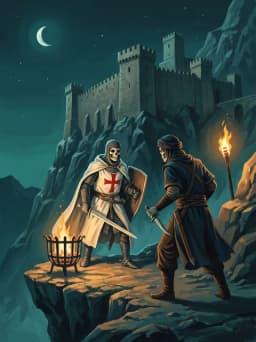
Templars and Assassins trivia questions
Who was the first man killed by Hasan-i Sabbah's fida'is, or devotees, in 1092?
- ASultan Malik-Shah
- BThe emir Yurun-Tash
- CMahdi, the former lord of Alamut
- DThe vizier Nizam al-Mulk
Show answer
D. The vizier Nizam al-Mulk. A follower disguised as a wandering holy man stabbed Nizam al-Mulk, the sultan's chief minister, in his litter. Forty days later Sultan Malik-Shah died too.
From “Alamut”, a story in AugurWhy were the first Templars in Jerusalem called the Knights of the Temple?
- AThey swore their vows inside a temple in France
- BTheir quarters stood on Jerusalem's Temple Mount
- CThey were founded to rebuild an ancient temple
- DTheir founder came from a town called Temple
Show answer
B. Their quarters stood on Jerusalem's Temple Mount. King Baldwin II gave them rooms in his palace on the Temple Mount, beside the holy site the crusaders called the Temple of the Lord, so people called them the Knights of the Temple.
From “The Poor Knights”, a story in AugurThe rule the Templars received at the Council of Troyes in 1129 banned hunting, with one exception. Which animal could they still hunt?
- ADeer
- BWild boar
- CLions
- DWolves
Show answer
C. Lions. The rule gave them white mantles, short hair, the right to own land, and no hunting except lions.
From “The Poor Knights”, a story in AugurWhat did the crusaders call Sinan, the Assassin leader who ruled from mountain castles like Masyaf in Syria?
- AThe Old Man of the Mountain
- BThe Lord of the Eagle's Nest
- CThe Hidden Imam
- DThe Sultan of the Hills
Show answer
A. The Old Man of the Mountain. Sinan, schooled at Alamut, ruled with knives instead of armies. The crusaders called him the Old Man of the Mountain, and kings took care not to attack his lands.
From “The Dagger by the Bed”, a story in AugurWhen an Assassin stabbed Saladin in the head at Azaz in 1176, what saved his life?
- AAn archer shot the attacker first
- BA guard recognised the killer at the door
- CA cap of mail under his hat
- DThe attacker's dagger snapped
Show answer
C. A cap of mail under his hat. The killer, dressed as one of Saladin's own soldiers, struck at his head and neck, but the mail held. An emir grabbed the knife with his bare hand.
From “The Dagger by the Bed”, a story in AugurWhich holy relic did the crusaders lose to Saladin at the Horns of Hattin in 1187?
- AThe Holy Lance
- BThe Crown of Thorns
- CThe Holy Grail
- DThe True Cross
Show answer
D. The True Cross. The army marched into the dry hills behind the True Cross, the kingdom's holiest relic. Surrounded and parched on the Horns of Hattin, it was destroyed and the Cross captured.
From “Hattin”, a story in AugurWho came to King Guy's tent at midnight and talked him into leaving the springs of Saffuriya to march for Tiberias?
- AGerard, master of the Templars
- BRaymond, count of Tripoli
- CBalian, lord of Ibelin
- DBohemond, prince of Antioch
Show answer
A. Gerard, master of the Templars. Raymond urged the king to stay by the water, and Guy agreed until Gerard de Ridefort came at midnight. The army marched into dry hills and was destroyed at Hattin.
From “Hattin”, a story in AugurIn November 1256, what was Rukn al-Din counting on to save his mountain castle of Maymun-Diz from the Mongols?
- AAn army marching from Egypt
- BHeavy snow sending the Mongols home
- CA truce bought with gold
- DPlague in the Mongol camp
Show answer
B. Heavy snow sending the Mongols home. Maymun-Diz sat on a peak so cold that winter should have saved it, but the snow never came. On 19 November Rukn al-Din came down and bowed before Hulagu.
From “Alamut Falls”, a story in AugurWhat did the men of King Philip IV of France do at dawn on Friday 13 October 1307?
- ABurned the Templars' fortress in Paris
- BStormed the Pope's palace at Poitiers
- CAbolished the Templar order
- DArrested every Templar in France
Show answer
D. Arrested every Templar in France. Philip was broke and knew exactly how rich the Templars were. His men arrested every Templar in France, and many were tortured into confessing.
From “Friday the 13th”, a story in Augur
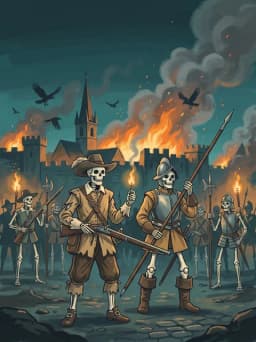
The Thirty Years' War trivia questions
What did Bohemia's Protestant lords do to two Catholic regents at Prague Castle on 23 May 1618?
- AStabbed them in the chancellery
- BLocked them in the castle dungeon
- CThrew them out of a window
- DSent them in chains to Vienna
Show answer
C. Threw them out of a window. Martinitz, Slavata and their secretary were thrown into the castle ditch, and all three lived. The war that followed lasted thirty years.
From “The Defenestration of Prague”, a story in AugurAfter surviving the Defenestration of Prague, what title did the secretary Philip Fabricius add to his name?
- Avon Karlstein
- Bvon Hohenfall
- Cvon Klostergrab
- Dvon Braunau
Show answer
B. von Hohenfall. Fabricius was the first to bring the Emperor the news, and later added the title von Hohenfall, "of High Fall," to his name.
From “The Defenestration of Prague”, a story in AugurWhy was Frederick, the elector who took Bohemia's crown in 1619, called the Winter King?
- AHe was crowned during a snowstorm
- BHe refused to fight in the winter months
- CHis army froze to death outside Vienna
- DHe held the crown for only one winter
Show answer
D. He held the crown for only one winter. The Jesuits whispered he would be a winter king, gone by summer. After defeat at the White Mountain in November 1620, he fled Prague.
From “The Winter King”, a story in AugurWhere was Frederick, the Winter King, when the Battle of the White Mountain began outside Prague in 1620?
- AAt dinner with two English ambassadors
- BLeading his cavalry from the front
- CAt prayer in the castle cathedral
- DAsleep in his tent on the hill
Show answer
A. At dinner with two English ambassadors. Frederick rode out to meet his own army running away. The battle lasted about an hour, and next morning he fled with his wife and baby son.
From “The Winter King”, a story in AugurIn 1625, how did Wallenstein offer to keep the Emperor's new army paid?
- ABy taxing Catholic Church lands across Germany
- BWith contributions forced from the places it camped
- CWith loans from the king of Spain
- DBy letting the soldiers loot whatever they found
Show answer
B. With contributions forced from the places it camped. Wallenstein raised the army at his own cost and paid it with contributions from the towns and districts where it camped. By the next spring he had fifty thousand men.
From “Wallenstein's Army”, a story in AugurWhich famous astronomer cast a horoscope for the general Albrecht von Wallenstein?
- ATycho Brahe
- BGalileo Galilei
- CJohannes Kepler
- DNicolaus Copernicus
Show answer
C. Johannes Kepler. Kepler described a restless, ambitious man, hungry for power, with dangerous enemies. Wallenstein believed in the stars for the rest of his life.
From “Wallenstein's Army”, a story in AugurAfter Tilly's army stormed Magdeburg in 1631, what did the phrase "Magdeburg quarter" come to mean?
- AA Protestant battle cry meaning no mercy
- BSurrender terms that spared civilians
- CA district rebuilt for refugees
- DA tax paid to the Swedish army
Show answer
A. A Protestant battle cry meaning no mercy. About twenty thousand people died as the city burned and was plundered. "Magdeburg quarter" became a Protestant battle cry meaning no mercy.
From “Magdeburg”, a story in AugurWhat happened to King Gustavus Adolphus of Sweden at the Battle of Lutzen in 1632?
- AHe was captured and ransomed
- BHe was wounded and went home to Sweden
- CHe lost the battle and retreated into Bohemia
- DHe was killed after riding into enemy cavalry in the fog
Show answer
D. He was killed after riding into enemy cavalry in the fog. Riding too fast for his escort, he was shot in the arm, the back and the head. Sweden won the battle and lost its king.
From “Lutzen”, a story in AugurHow did Queen Christina of Sweden, daughter of the Protestant hero Gustavus Adolphus, leave her throne?
- AShe gave up her crown in 1654, became a Catholic and settled in Rome
- BShe was deposed by her council for refusing to marry
- CShe was killed leading an army in Germany
- DShe died in childbirth
Show answer
A. She gave up her crown in 1654, became a Catholic and settled in Rome. Christina refused to marry, named her cousin Charles Gustav heir and gave him the crown in 1654. She became a Catholic and died in Rome in 1689.
From “The Peace of Westphalia”, a story in Augur
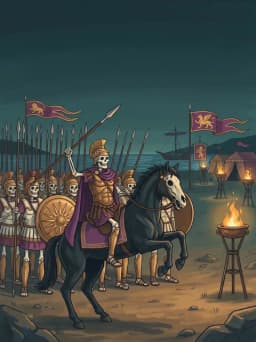
The Rise of Macedon trivia questions
What was the sarissa, the weapon at the heart of Philip II's new Macedonian phalanx?
- AA large bronze round shield
- BA heavy throwing javelin
- CA curved slashing sword
- DA pike about as long as three tall men
Show answer
D. A pike about as long as three tall men. Philip packed his foot soldiers tight, rank behind rank, armed with the sarissa. The phalanx became a moving hedge of points.
From “Philip's Army”, a story in AugurAs a teenage hostage, Philip of Macedon grew up in which city, watching the best army in Greece?
- AThebes
- BAthens
- CCorinth
- DSparta
Show answer
A. Thebes. Philip lived in Thebes in the household of Epaminondas, the general who had made Thebes the top power in Greece.
From “Philip's Army”, a story in AugurHow did the Athenian Demosthenes train himself to overcome his mumbling and lisp?
- AHe kept total silence for a whole year
- BHe only ever read his speeches from scrolls
- CHe studied with Socrates in the market
- DHe recited speeches with pebbles in his mouth
Show answer
D. He recited speeches with pebbles in his mouth. He recited speeches with pebbles in his mouth, practised while running uphill and rehearsed before a big mirror. He became Athens's great speaker.
From “Chaeronea”, a story in AugurAt the battle of Chaeronea in 338 BCE, who broke the Theban line?
- AParmenion, Philip's veteran general
- BPhilip's eighteen-year-old son, Alexander
- CAttalus, Philip's general
- DPhilip himself
Show answer
B. Philip's eighteen-year-old son, Alexander. Alexander, eighteen, broke the Theban line while Philip routed the Athenians. More than a thousand Athenians died and two thousand were captured.
From “Chaeronea”, a story in AugurWho stabbed Philip II to death in the theatre at Aegae in 336 BCE?
- AAttalus, his new wife's uncle
- BAn Athenian sent by Demosthenes
- CA Persian spy in the crowd
- DPausanias, one of his own bodyguards
Show answer
D. Pausanias, one of his own bodyguards. Attalus had Pausanias brutally assaulted, and Philip gave him gifts instead of justice. Pausanias rushed the king with a hidden dagger.
From “Murder at Aegae”, a story in AugurWhen Alexander's allies destroyed Thebes in 335 BCE, whose house did Alexander spare?
- AThe general Epaminondas's
- BThe hero Pelopidas's
- CThe poet Pindar's
- DThe poet Hesiod's
Show answer
C. The poet Pindar's. Thebes was razed, more than six thousand Thebans were killed and more than thirty thousand sold as slaves. Alexander spared the house of Pindar.
From “Murder at Aegae”, a story in AugurDarius offered a vast ransom, every land west of the Euphrates and his daughter's hand. Parmenion said he would accept if he were Alexander. What did Alexander reply?
- A"Gold has never bought a Macedonian."
- B"Then go and marry her yourself."
- C"So would I, if I were Parmenion."
- D"A king does not sell back his prisoners."
Show answer
C. "So would I, if I were Parmenion.". Alexander refused the offer. Tyre fell after seven months, and Darius gave up on talking and gathered the largest army he could find.
From “Darius's Offer”, a story in AugurWhen the palace official Bagoas, who had already poisoned one king, tried to poison Darius III, what did Darius do?
- AForgave him and kept him at court
- BHad him trampled by war elephants
- CExiled him to far-off Bactria
- DHanded Bagoas his own cup and made him drink it
Show answer
D. Handed Bagoas his own cup and made him drink it. Bagoas had picked Darius, a royal cousin famous for his courage, for the throne. When he tried poison on Darius too, Darius made him drink it.
From “Gaugamela”, a story in AugurWhen the defeated Indian king Porus was asked how he wished to be treated, what did he answer?
- ALike any other prisoner
- BLike a king
- CLike a soldier who lost fairly
- DLike a friend of Macedon
Show answer
B. Like a king. Porus fought from his elephant until a wound forced him away. When he answered "Like a king," Alexander gave him back his kingdom, and more.
From “The Hyphasis”, a story in Augur
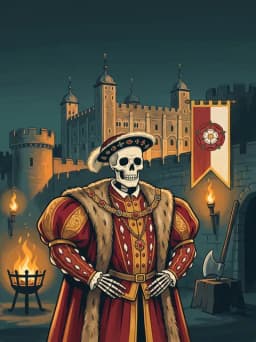
The Tudors trivia questions
Which book of the Bible convinced Henry VIII that God was denying him a son with Catherine of Aragon?
- AGenesis
- BDeuteronomy
- CExodus
- DLeviticus
Show answer
D. Leviticus. Catherine had first married Henry's older brother, Arthur. Leviticus says a man who marries his brother's wife will be childless.
From “The King's Great Matter”, a story in AugurWhom did Henry VIII marry eleven days after Anne Boleyn was beheaded in 1536?
- AJane Seymour
- BAnne of Cleves
- CCatherine Howard
- DCatherine Parr
Show answer
A. Jane Seymour. Anne was beheaded on 19 May 1536 by a swordsman brought from across the Channel. Eleven days later Henry married Jane Seymour.
From “The Fall of Anne Boleyn”, a story in AugurWho led the Pilgrimage of Grace, the great northern rising of 1536?
- ARobert Kett, a Norfolk landowner
- BThomas Wyatt, a Kent gentleman
- CRobert Aske, a Yorkshire-born lawyer
- DThe Duke of Norfolk
Show answer
C. Robert Aske, a Yorkshire-born lawyer. Rebels pulled Aske into the rising after he crossed the Humber. He named it the Pilgrimage of Grace and rode into York with thousands of horsemen.
From “The Pilgrimage of Grace”, a story in AugurWhat did the marchers of the Pilgrimage of Grace carry on their badges and banner?
- AThe red cross of St George
- BThe Five Wounds of Christ
- CThe Tudor rose
- DThe keys of St Peter
Show answer
B. The Five Wounds of Christ. Aske said his marchers were pilgrims, not rebels, sworn to defend the Church and the king. Their badges and banner bore the Five Wounds of Christ.
From “The Pilgrimage of Grace”, a story in AugurWhich young woman, once proclaimed queen, was beheaded in February 1554 after Wyatt's Rebellion, though she took no part in it?
- ALady Jane Grey
- BPrincess Elizabeth
- CMary, Queen of Scots
- DCatherine of Aragon
Show answer
A. Lady Jane Grey. Mary's council argued that while Jane lived, the next rebel would use her name. Jane and her husband were beheaded at the Tower on 12 February.
From “Wyatt's Rebellion”, a story in AugurWhen Thomas Wyatt's rebels were a day's march from London in 1554, what did Mary I do?
- AShe fled to Windsor Castle
- BShe sailed across the sea to Calais
- CShe called off her marriage to Philip of Spain
- DShe went to the Guildhall and asked Londoners to stand by her
Show answer
D. She went to the Guildhall and asked Londoners to stand by her. Mary read out Wyatt's demands at the Guildhall. Londoners threw up their caps and the city armed, and Wyatt surrendered after finding Ludgate barred.
From “Wyatt's Rebellion”, a story in AugurHow were Mary, Queen of Scots' secret letters carried in and out during the Babington Plot?
- ASewn into the lining of a servant's gloves
- BInside hollow books from her library
- CIn a watertight box hidden in a beer barrel
- DIn the French ambassador's sealed mail
Show answer
C. In a watertight box hidden in a beer barrel. Walsingham set up the route himself. A brewer carried the box, and his codebreaker Thomas Phelippes decoded and copied every letter before sending it on.
From “Mary, Queen of Scots”, a story in AugurWhat happened to William Davison, the secretary who got Elizabeth I's signature on Mary, Queen of Scots' death warrant?
- AHe was beheaded for treason
- BHe was sent to the Tower and fined 10,000 marks
- CHe was made a baron
- DHe was sent as ambassador to Scotland
Show answer
B. He was sent to the Tower and fined 10,000 marks. The council sent the signed warrant to Fotheringhay without telling Elizabeth. After the execution she declared Davison had disobeyed her, and he was sent to the Tower and fined 10,000 marks.
From “Mary, Queen of Scots”, a story in AugurWhich English captain raided Cadiz in 1587 and called it singeing the king of Spain's beard?
- AWalter Raleigh
- BJohn Hawkins
- CMartin Frobisher
- DFrancis Drake
Show answer
D. Francis Drake. Drake wrecked ships and stores meant for the Armada in Cadiz harbour, and the fleet could not sail that year.
From “The Armada”, a story in Augur
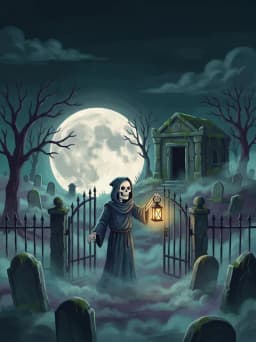
Creepy History trivia questions
At the Cadaver Synod in Rome in 897, who was put on trial?
- AA living cardinal accused of heresy
- BLambert of Spoleto
- CPope Stephen VI
- DThe corpse of Pope Formosus
Show answer
D. The corpse of Pope Formosus. Stephen VI had Formosus dug up nine months after his death, dressed in papal robes and propped on a throne, while a deacon answered in his name.
From “The Cadaver Synod”, a story in AugurWhat did Pope John IX ban in 898, in the wake of the Cadaver Synod?
- APutting the dead on trial
- BBurying popes outside St Peter's
- CCrowning emperors outside Rome
- DHolding church councils during Lent
Show answer
A. Putting the dead on trial. After Formosus was condemned and thrown into the Tiber, Theodore II reburied him in St Peter's, and John IX banned trials of the dead.
From “The Cadaver Synod”, a story in AugurWhen Sultan Mehmed II reached Vlad Dracula's capital, Târgoviște, in 1462, what did he find?
- AVlad's army drawn up for battle
- BAn empty city surrounded by about twenty thousand people on stakes
- CThe city burned to the ground
- DVlad's nobles waiting to hand over the keys
Show answer
B. An empty city surrounded by about twenty thousand people on stakes. Vlad left the gates open. Outside stood about twenty thousand men, women and children on stakes, Hamza on the highest. Mehmed turned for home.
From “The Night Attack”, a story in AugurWhy did Vlad Dracula's night raid on the Ottoman camp in June 1462 fail to kill Sultan Mehmed II?
- ARadu warned the sultan, who fled in time
- BHis horsemen lost their way in the forest
- CThey hit the viziers' tents, not the sultan's
- DHeavy rain put out all of their torches
Show answer
C. They hit the viziers' tents, not the sultan's. The riders hunted for the sultan's tent but struck two of his viziers. Mehmed's men had orders to stay in their tents at night, so the camp never panicked.
From “The Night Attack”, a story in AugurWhat grand title did the witch hunter Matthew Hopkins give himself, though Parliament never granted it?
- ALord Protector of the Faith
- BChief Inquisitor of England
- CKeeper of the King's Peace
- DWitchfinder General
Show answer
D. Witchfinder General. Hopkins put Witchfinder General on his own pamphlet. In about fourteen months his hunt hanged more people for witchcraft than the rest of England had in 160 years.
From “The Witchfinder General”, a story in AugurIn 1726, Mary Toft of Godalming convinced doctors, and the King's own anatomist, that she was giving birth to what?
- ARabbits
- BPuppies
- CPiglets
- DChickens
Show answer
A. Rabbits. Her doctor delivered rabbit after rabbit, and Nathaniel St André declared the births genuine. In December Mary confessed that animal parts had been placed inside her.
From “Mary Toft's Rabbits”, a story in AugurWhat first broke open Mary Toft's rabbit hoax in December 1726?
- AHer doctor, John Howard, confessed to the hoax
- BA porter said he'd been paid to bring her a rabbit
- CHer husband testified against her in court
- DSt André withdrew his pamphlet
Show answer
B. A porter said he'd been paid to bring her a rabbit. A porter confessed that her sister-in-law, Margaret Toft, had paid him to bring in a rabbit. Threatened with a painful operation, Mary then confessed.
From “Mary Toft's Rabbits”, a story in AugurTo which Edinburgh anatomist did Burke and Hare sell the bodies of the people they killed?
- AJohn Barclay
- BAlexander Monro
- CDr Robert Knox
- DJohn Hunter
Show answer
C. Dr Robert Knox. Knox's private school in Surgeons' Square paid up to £10 a body and asked nothing, even for bodies that had never been buried. He was never charged.
From “Burke and Hare”, a story in AugurIn 1892, why did neighbours in Exeter, Rhode Island, dig up the body of Mercy Lena Brown?
- ATo move her body to a new family plot
- BTo check whether she had been poisoned
- CBecause grave robbers had disturbed her grave
- DThey believed she was draining her dying brother
Show answer
D. They believed she was draining her dying brother. Consumption was killing the Browns one by one. The neighbours burned Lena's heart and liver and gave the ashes to her brother Edwin, who died anyway.
From “The Last Vampire Panic”, a story in Augur
Think you know them now? Prove it.
Take the 10-question history quiz, or live every one of these moments in Augur.